Breads, savoury pastries
Bagels with rustic bread mix
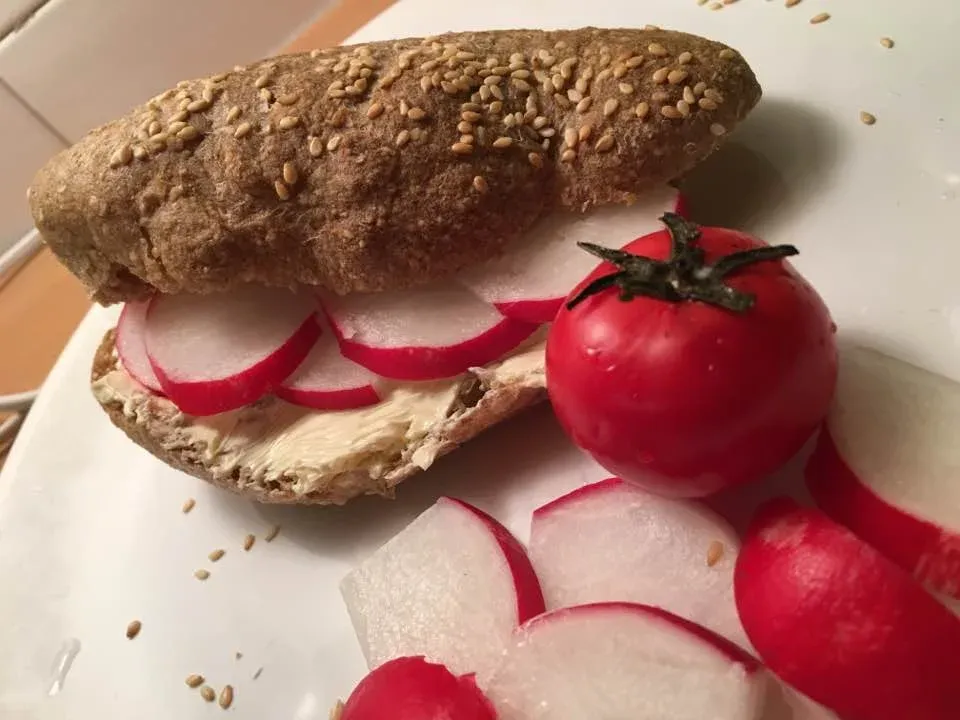
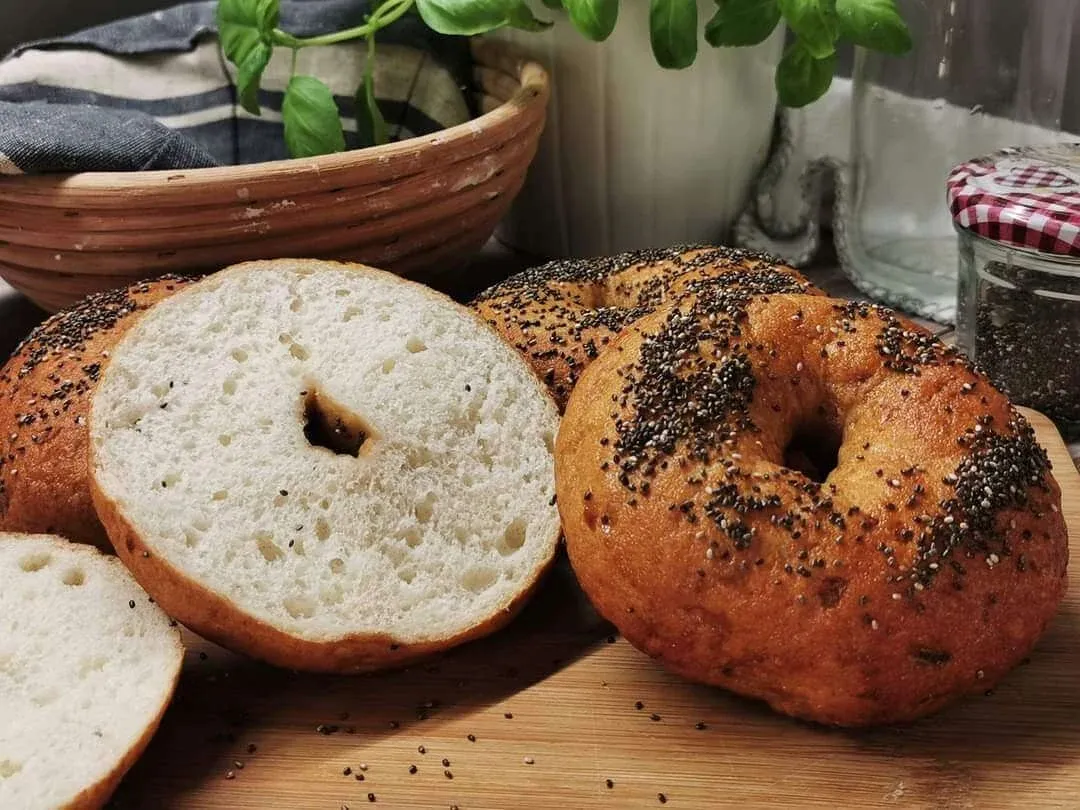
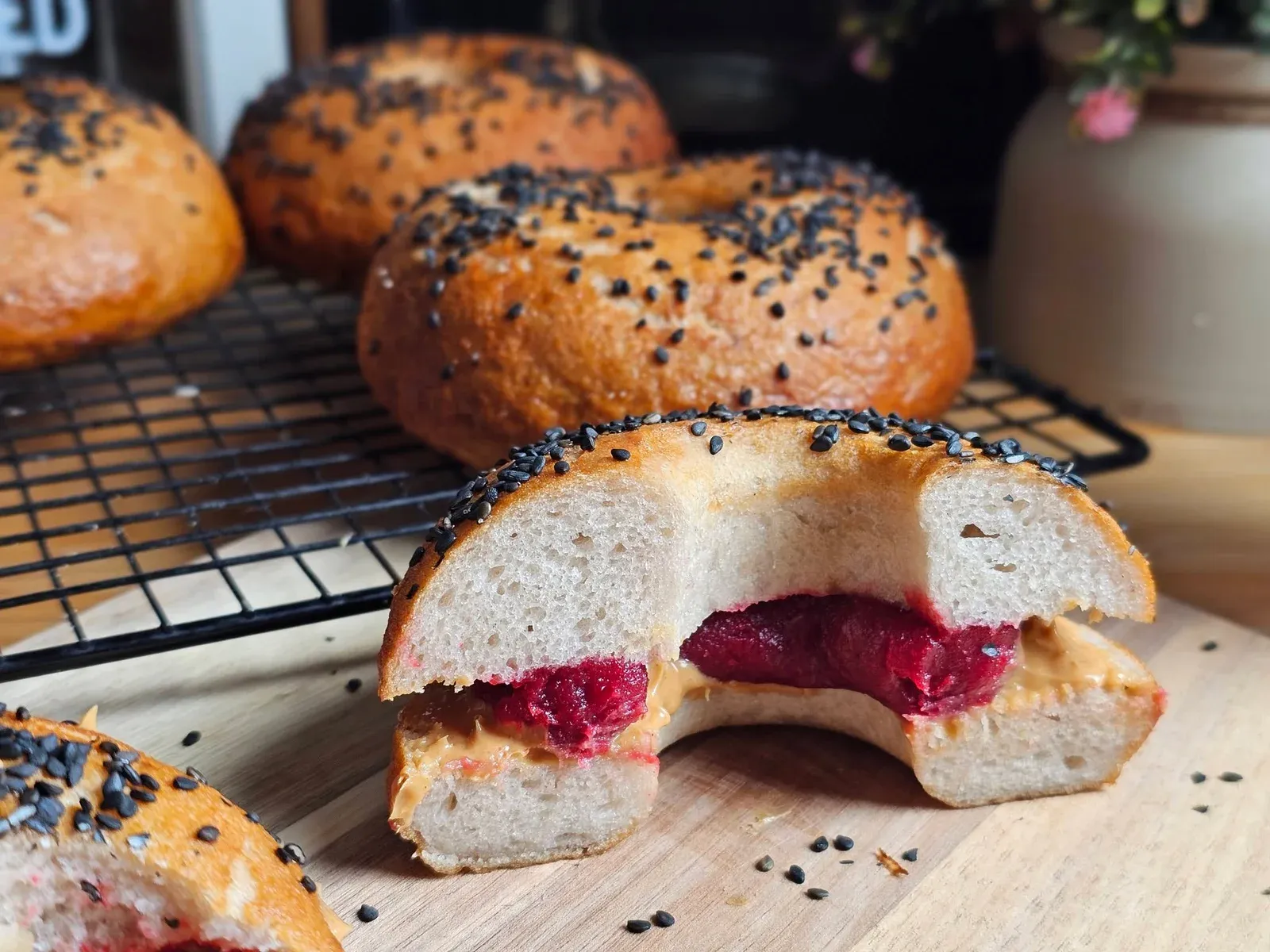
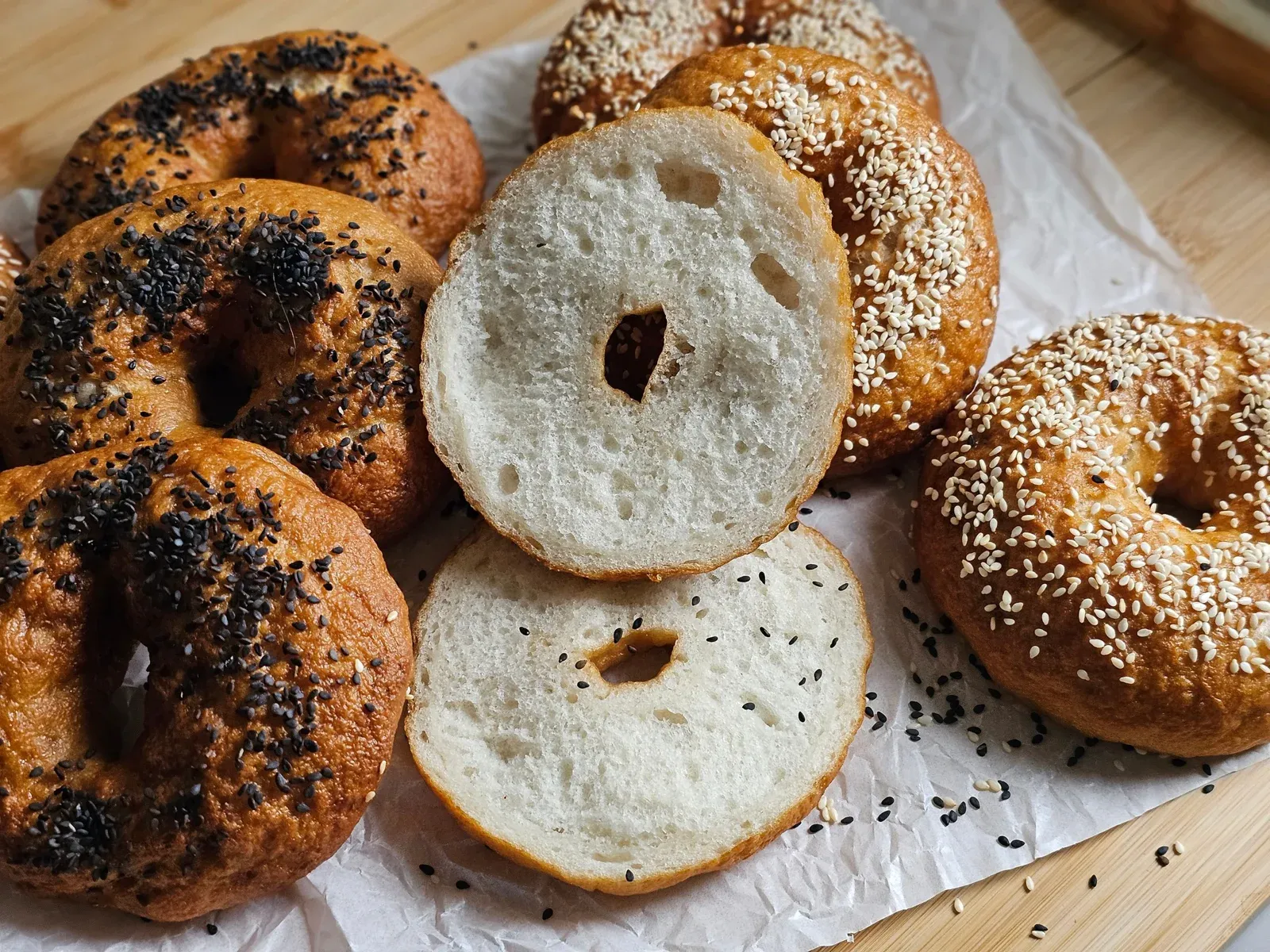
Boiled bagels topped with seeds.
One simple dough, soft bagels: bakes made with the rustic bread mix. If you simply bake the shaped dough, you get bread rolls; if you boil it first in alkaline honey water, you get bagels.
- Portions8 pieces
- DifficultyMedium
 Enjoy
Ingredients (for 8):
For the dough:
For boiling:
For the top:
- Pour the lukewarm water into a mixing bowl, add the sugar or honey and crumble in the yeast. Leave for 5–10 minutes until it froths.
- Add the psyllium husk fibre and stir until there are no lumps.
- Add the flour mix and the salt, and knead into a smooth, even dough. At the end of kneading, drizzle in the oil as well and work it in thoroughly.
- Put the dough in a proving bowl, cover with cling film and leave to rise at room temperature for 35–40 minutes.
- Knead the risen dough on a lightly oiled surface, divide it into 8 equal pieces and shape them into smooth buns.
- Make a hole in the middle of each bun with your finger, then cover and leave to rise for a further 15–20 minutes.
- Meanwhile, preheat the oven to 180°C, fan setting.
- Bring the 2 litres of water to the boil in a large pan, then add the salt, the bicarbonate of soda and the honey or sugar.
- Boil the bagels in batches, for 1 minute on each side. Don’t overcrowd the pan, as the dough swells in the water.
- Lift the boiled bagels onto a baking tray lined with baking paper, and sprinkle the tops with seeds.
- Bake at 180°C for about 30 minutes, until nicely golden brown.
Enjoy!